

Teach English in Hungary
The Ultimate 2026 Guide to the CETP, the White Card, and Life in the Pearl of the Danube.
Hungary is one of Central Europe’s most captivating destinations. With its dramatic architecture, legendary thermal baths, and exceptionally low cost of living, it is a haven for expats. In 2026, the demand for native English speakers in both public schools and private language academies is at an all-time high.
For EU citizens, the market is wide open with no visa barriers. For Non-EU citizens (Americans, Canadians, etc.), finding independent work is tough due to strict labor laws. However, Hungary offers two incredible workarounds: the famous CETP program (which places you in public schools and provides a work visa) and the White Card (a highly accessible Digital Nomad Visa for online teachers).
Whether you are applying to the competitive CETP program, interviewing at a private academy in Budapest, or securing high-paying online students to qualify for the White Card, a myTEFL 120-hour certificate is the essential baseline credential that proves your professional capability.
Quick Facts
What’s in this guide?
Your roadmap to the Carpathian Basin. Learn how to conquer the White Card, budget in Forint, and find the best teaching gigs in Budapest and beyond.
- The TEFL jobs market in Hungary
- CETP, Language Schools & Nomads
- Teacher Salary in Hungarian Forint (HUF)
- The White Card & Visa Rules
- Requirements for 2026
- School Terms & Summer Camps
- Cost of living: Budapest vs. Szeged
- Where to teach: Budapest, Debrecen, Pécs
- Getting hired: The Independent Route
- Hungary TEFL FAQs

The TEFL jobs market in Hungary
Hungary offers a classic European teaching experience with a much more accessible cost of living than the West. The market here is split into three distinct categories based largely on your passport.
For EU citizens, private language schools in Budapest are the primary employers. They teach a mix of young learners after school and adults seeking Business English. For Non-EU citizens, navigating local employment is tough. Therefore, most North Americans use the Central European Teaching Program (CETP). This organization charges a placement fee but guarantees a public school job, free housing, and handles the complex work visa process on your behalf.
The fastest-growing segment of the market in 2026, however, is the Digital Nomad. Hungary’s "White Card" visa allows remote workers (like online TEFL teachers) to live in the country tax-free for up to a year. Budapest has become one of the premier global hubs for online educators.
- Population: 9.6 million
- Language(s): Hungarian (Magyar)
- Currency: Hungarian Forint (HUF)
- Capital city: Budapest
- Estimated salary: 350k - 450k HUF
- Public Holidays: 11 days
- Climate: Continental (4 Seasons)
- Main Transport: Trams, Metro & Trains
- Internet: Exceptional (Top 20 Globally)
Types of English teaching jobs in Hungary
From government-backed public school placements to teaching online from a ruin bar.
The CETP Program
The standard route for Americans and Canadians. You pay a program fee upfront, but receive a guaranteed placement in a public school, free housing, and a work visa.
Online / Digital Nomad
Extremely popular. You teach students globally online while living in Hungary on the White Card. Budapest is a massive hub for remote TEFL workers.
Private Language Schools
Primarily hire EU citizens or those with existing residency. You teach small groups in the afternoons and evenings. Business English is in high demand.
Bilingual / Int. Schools
Private schools catering to wealthy locals or expats. They pay higher salaries but require a formal state teaching license and previous classroom experience.
TEFL teacher salary in Hungary
Hungary is a lifestyle destination, not a country where you will save thousands of dollars. Local wages are lower than in Western Europe, but the cost of living matches those wages perfectly.
A typical language school teacher earns between 350,000 and 450,000 HUF ($950 - $1,250 USD) per month. Private tutoring can boost this, with teachers charging 5,000 to 7,000 HUF ($14 - $20 USD) an hour.
If you go through the CETP Program, your cash salary will look lower (roughly $500 - $700 USD). However, CETP provides rent-free, fully furnished accommodation and covers your utilities. Since rent is a massive expense in Budapest, this is an incredibly valuable perk that levels the playing field.
Monthly Salary Range (HUF)
| Language School (Avg Net) | 350,000 - 450,000 |
| CETP Program (Plus Free Housing) | 180,000 - 250,000 |
| Private Tutoring (Hourly) | 5,000 - 7,000 / hr |
| Rent (1-Bed in Budapest) | 180,000 - 250,000 |
| Rent (1-Bed in Provinces) | 100,000 - 150,000 |
The White Card & Visa Rules
EU Citizens: You can live and work freely in Hungary. You only need to register your address upon arrival.
Non-EU Citizens (Local Work Permit): Securing a standard work visa from a private language school is very difficult due to strict EU labor laws. This is why the vast majority of non-EU teachers use the CETP program, which has a special arrangement with the government to secure visas for public school placements.
The White Card (Digital Nomad Visa)
Introduced to attract global talent, the White Card is a 1-year residence permit for remote workers. If you teach English online for a non-Hungarian company, you can live in Hungary legally. You must prove a stable income of at least €3,000 per month and have €10,000 in savings. If you spend less than 183 days a year in Hungary, you pay 0% local income tax. If you stay longer, the tax is a flat 15%.
Requirements to teach English in Hungary
Hungary strictly regulates its education sector. To secure a visa or a reputable job, you must meet the following criteria in 2026.
- Bachelor’s Degree Mandatory. Whether you are applying for a local work permit or entering through the CETP program, a 4-year degree (in any subject) is required.
- 120-Hour TEFL Certificate Essential. Private academies and the CETP program require a TEFL certification to prove you have the necessary classroom management skills.
- Native English Speaker The CETP program strictly requires passports from the US, UK, Canada, Ireland, or South Africa. EU citizens who are non-native but fluent (C2) can find work in private academies.
- Clean Health & Background You must provide an apostilled criminal background check and a signed letter from a doctor stating you are in good physical and mental health.
School Terms & Summer Camps
Hiring Season: The academic year begins in September. The CETP program recruits heavily in the spring and early summer. Private language academies hire mainly in late August/September and January.
Summer Opportunities
During July and August, regular classes halt, but a thriving Summer Camp industry takes over. Many teachers pick up short-term contracts working at intensive English camps near Lake Balaton or in the mountains, which often include free room and board.
Working Hours: Public school teachers (CETP) work standard daytime hours (8 AM - 3 PM). Private academy teachers usually work split shifts, teaching adults in the morning and kids in the late afternoon/evening.
Cost of living & Savings in Hungary
Hungary is highly affordable compared to Western Europe. While Budapest has experienced inflation, it remains a haven for budget-conscious expats.
Housing: If you are not in a program that provides housing (like CETP), rent will be your biggest expense. A one-bedroom apartment in central Budapest costs around 200,000 HUF ($550 USD). In smaller cities like Szeged or Pécs, rent drops by 30-40%.
Food & Transport: Eating out is cheap, with a hearty meal at a traditional Hungarian restaurant costing just $8-$10. A monthly public transport pass in Budapest is roughly $25 USD and provides unlimited access to a world-class metro and tram system.
Monthly Budget (Single Teacher)
| Rent (1-Bed in Budapest) | 180,000 - 250,000 HUF |
| Utilities & Internet | 30,000 - 50,000 HUF |
| Groceries | 70,000 - 100,000 HUF |
| Transport Pass | 9,000 HUF |
| Leisure/Dining Out | 40,000 - 70,000 HUF |
Where to teach English in Hungary?
While Budapest is a global TEFL hub, placing in a regional city offers a deeply authentic and immersive cultural experience.
Budapest
The "Paris of the East." Home to 20% of the population and the vast majority of private language schools. It is famous for its ruin bars, thermal baths, and massive digital nomad community.
Debrecen
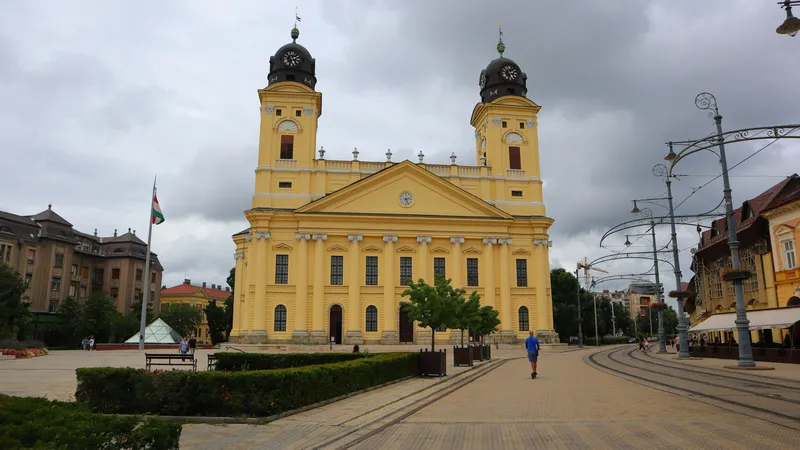
Hungary's second-largest city. Located on the Great Hungarian Plain, it is a major university town with a slower, more traditional pace of life and a significantly lower cost of living.
Szeged
Known as the "City of Sunshine." Located in the south near the Serbian border, it boasts stunning Art Nouveau architecture, a famous university, and a very lively student culture.

Pécs
A gorgeous city in the southwest near the Croatian border, rich in Roman and Ottoman history. It offers a Mediterranean climate and is a popular placement destination for the CETP program.
How to get a job in Hungary
Whether you are an EU citizen applying locally, a Non-EU citizen entering the CETP program, or a Digital Nomad teaching online, a professional TEFL credential is the key to unlocking the market.
Get Your 120-Hour Certificate
Hungarian language schools and the CETP public school program expect high pedagogical standards. A 120-hour myTEFL certificate proves your capability and is crucial for securing high-paying online students if you are taking the White Card route.
- CETP Requirement: Mandatory for public school placements.
- Nomad Ready: Required by major online platforms.
- Accredited: Globally recognized standard.
- Lifetime Access: Keep your lesson plans forever.
Frequently Asked Questions
Crucial info for the 2026 Hungarian teaching landscape.